
Your engineers are already using AI agents. You just don’t know how.
Fragmented adoption feels like progress. It’s actually risk you haven’t priced in yet.
Walk onto any engineering floor today and ask who’s using an AI coding agent. Half the hands go up. Ask them how, and you get five different answers — five different tools, five different habits, five different levels of trust in what the agent produces. Nobody coordinated this. It just happened, one engineer at a time, because the tools got good enough to be useful without anyone’s permission.
Founders read this as adoption. It isn’t. It’s noise that happens to look like progress.
The silent default
“Culture eats strategy for breakfast.” — Peter Drucker, management consultant
Claude Code, Cursor, Copilot — pick your flavor. Somewhere in your org, engineers are already delegating real work to agents: scaffolding, refactors, test generation, sometimes entire features. Nobody rolled this out. Nobody trained anyone. It arrived the way most good developer tools arrive — bottom-up, quietly, one curious engineer at a time.
That’s not a problem by itself. The problem is what happens next: nothing. No standard, no shared practice, no institutional memory. Just N engineers, each with their own private relationship with the agent.

Why individual gains don’t compound
“The whole is greater than the sum of its parts.” — Aristotle
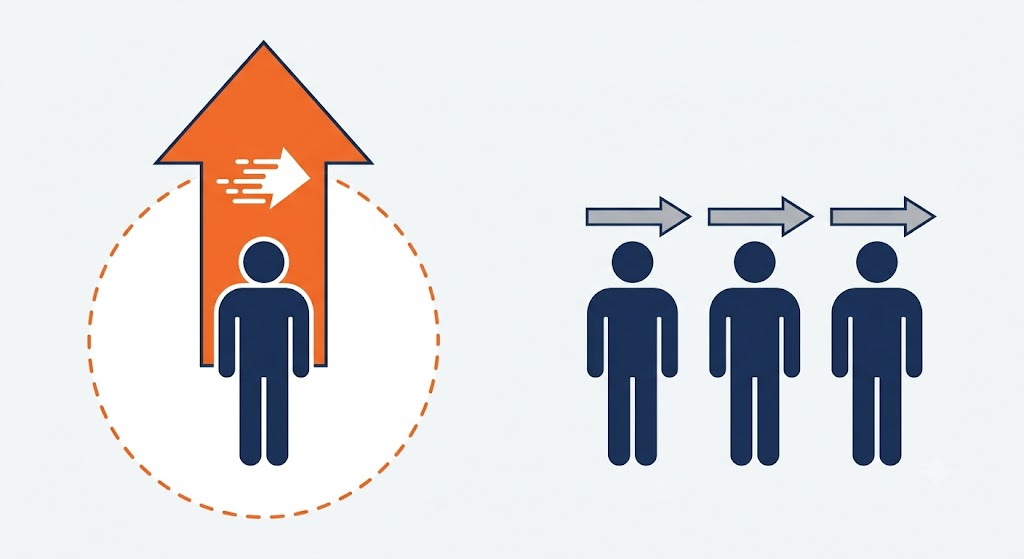
One engineer getting three times faster on a task doesn’t make your team three times faster. It makes one engineer faster, in a way that’s invisible to everyone else, and gone the day they leave.
The technique — how to structure context, when to trust the output, which tasks are a good fit and which aren’t — lives entirely in that person’s head. It never becomes a team asset. You end up with the appearance of AI leverage and none of the compounding.
That’s the actual cost of “everyone’s already using it.” It’s not that the tools don’t work. It’s that nothing about the gain survives the individual who found it.
The mistake founders make trying to fix it
“If you can’t describe what you are doing as a process, you don’t know what you’re doing.” — W. Edwards Deming
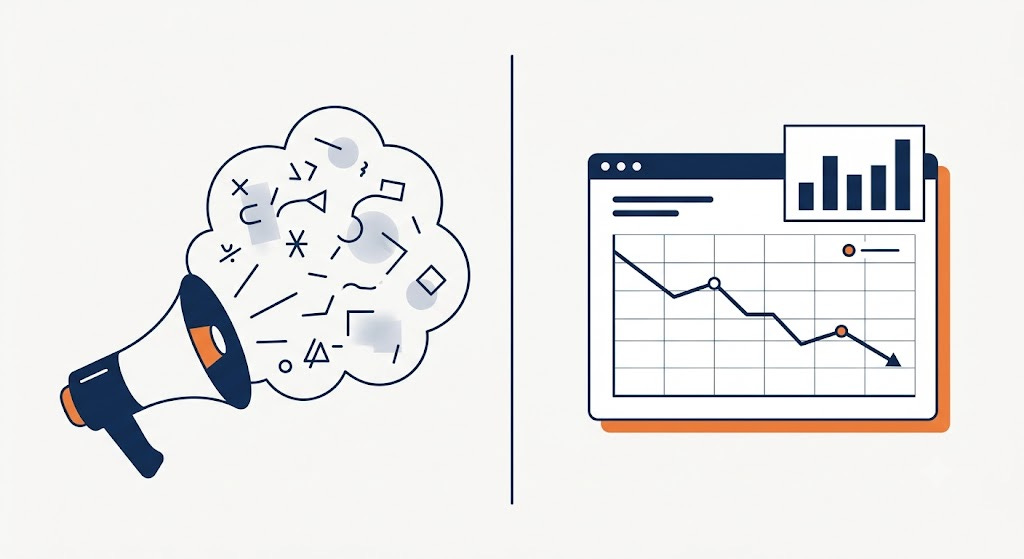
The instinct, once a founder notices this, is to announce something: “we should be using AI more,” a Slack post, maybe a mandate. This lands nowhere. Engineers who already use these tools feel talked down to. Engineers who don’t hear vague pressure with no clear ask.
The framing that actually works has nothing to do with AI. It’s the framing you already use for everything else that matters: cycle time, PR review load, defect rate, time from ticket to shipped. Ask what’s slow, then ask whether agentic workflows could close that gap — and only then does the tool conversation make sense. Nobody needs to believe in AI to believe in a faster cycle time.
What actually needs to be standardized
“Standards are always out of date. That’s what makes them standards.” — Alan Bennett
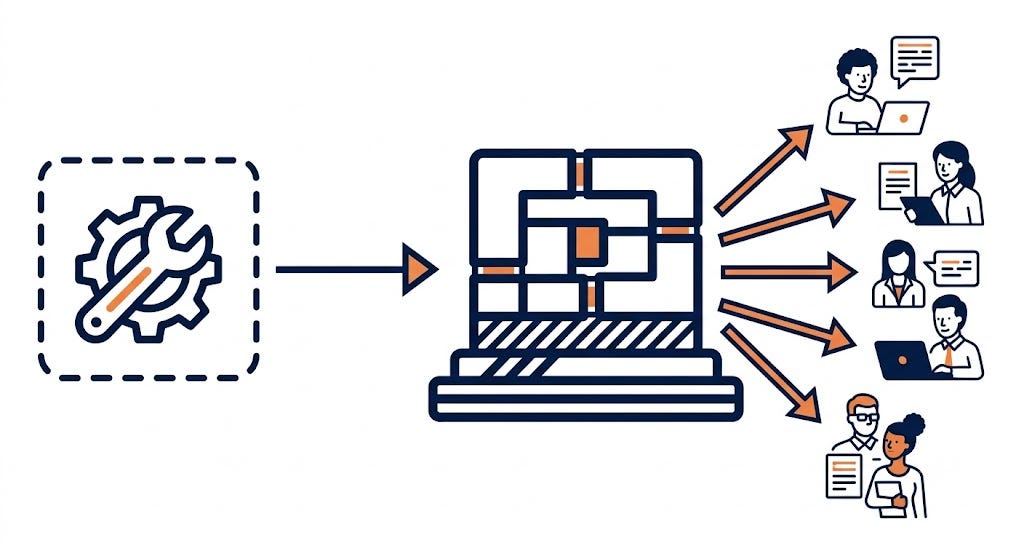
Here’s the part most people get wrong: the standardization isn’t about picking one tool. It’s about the harness around it — the context files, the reusable instructions, the guardrails specific to your codebase and your kind of work.
That harness is what turns “an engineer who’s good at prompting” into a team capability. It’s durable in a way the tool itself isn’t — vendors change, models change, but a well-built set of shared conventions for how your team briefs an agent survives all of that. This is infrastructure, and infrastructure is the founder’s job to fund, not the engineer’s job to invent alone in their spare time.
How to roll it out without killing it
Don’t mandate this. Pilot it. Pick one or two teams, give them room to build and document a shared approach for a few weeks, and measure something concrete — review time, cycle time, whatever you already track. A small, visible win earns the rest of the org’s trust in a way no policy memo ever will.
The goal isn’t universal compliance on day one. It’s proof that’s specific enough to spread on its own.
“Plans are worthless, but planning is everything.” — Dwight D. Eisenhower
The real decision founders are making
Strip away the tooling conversation and there’s a simpler question underneath: does the knowledge your best engineers are building right now stay trapped in their heads, or does it become something your company owns?
“The best way to predict the future is to invent it.” — Alan Kay
That’s not an engineering decision. It’s a founder decision, the same way choosing to invest in documentation or onboarding is a founder decision. The teams that get this right in the next year won’t be the ones with the most AI usage. They’ll be the ones who noticed early that this needed to be built like infrastructure — and built it before it became someone else’s job to clean up.